
Choosing a technology stack is one of the most impactful decisions a startup founder will make. The wrong choice can lead to months of wasted development time, scalability bottlenecks, and spiraling costs. The right choice accelerates your go-to-market timeline, reduces long-term maintenance burden, and positions your product for growth.
At Jafen Media, we have helped over 150 startups and established brands navigate this decision. Drawing from our hands-on experience shipping production applications across diverse industries, we have developed a systematic framework for evaluating technology choices.
Understanding Your Requirements First
Before comparing frameworks, you need clarity on four dimensions: your target audience and expected traffic patterns, the complexity of your user interface, your team's existing expertise, and your timeline to launch. A B2B SaaS dashboard has fundamentally different requirements than a consumer-facing e-commerce platform.
The Frontend Landscape in 2025
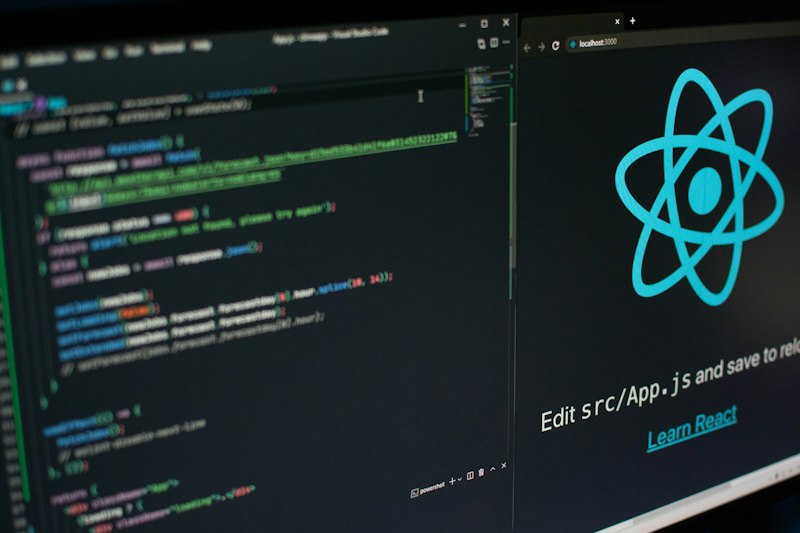
React remains the dominant frontend library, powering applications for companies of every scale. However, the real decision lies in the meta-framework layer. Next.js has emerged as the leading full-stack React framework, offering server-side rendering, static site generation, and API routes in a single cohesive package.
For startups targeting SEO-critical markets, Next.js provides a significant advantage with its hybrid rendering capabilities. Pages that need to rank on Google can be statically generated or server-rendered, while interactive dashboard sections use client-side rendering for optimal performance.
Vue.js with Nuxt offers a comparable feature set with a gentler learning curve, making it an excellent choice for teams with less React experience. Svelte with SvelteKit represents the cutting edge, compiling components to vanilla JavaScript for exceptional runtime performance.
Backend Considerations
Node.js continues to dominate the startup backend landscape for good reason: shared JavaScript expertise across the stack, a massive ecosystem of packages, and excellent performance for I/O-heavy workloads like API servers. Combined with TypeScript for type safety, it provides a productive and reliable foundation.
Python with FastAPI or Django is the go-to choice when your product involves machine learning, data processing, or scientific computation. Go excels for performance-critical microservices where concurrent processing is essential.
Database Selection
PostgreSQL is our default recommendation for most startups. It handles relational data elegantly, supports JSON columns for semi-structured data, has excellent full-text search capabilities, and scales vertically to handle millions of rows with proper indexing.
MongoDB makes sense when your data model is genuinely document-oriented and you need flexible schemas during rapid iteration. Redis serves as the ideal complement for caching, session management, and real-time features like pub/sub messaging.
Our Recommended Stack for Most Startups
Based on hundreds of projects, our go-to recommendation for most startups is: Next.js for the frontend and API layer, PostgreSQL via Prisma ORM for data persistence, Redis for caching and sessions, Vercel or AWS for deployment, and TypeScript across the entire stack.
This combination delivers fast development velocity, excellent SEO performance, type safety that catches bugs before production, and a clear scaling path as your user base grows from hundreds to millions.
Making Your Decision
The best tech stack is ultimately one that your team can execute on effectively. Trendy technologies mean nothing if your developers cannot ship features quickly and reliably. Start with proven tools, validate your product-market fit, and optimize your stack as concrete performance requirements emerge from real usage data.
Frequently Asked Questions
Quick answers to common questions
The best tech stack for most startups in 2025 is Next.js with TypeScript on the frontend, Node.js for the backend, and PostgreSQL as the database. This combination provides fast development speed, strong SEO capabilities, and a clear path to scaling as your user base grows.
Building a startup tech stack can range from nearly free using open-source tools to $50,000+ for custom enterprise solutions. Most early-stage startups spend between $5,000 and $20,000 on initial infrastructure, with cloud hosting costs starting at $50-200 per month on platforms like Vercel or AWS.
Next.js is generally the better choice for startups in 2025 because it builds on top of React while adding server-side rendering, automatic code splitting, and built-in SEO optimization. Unless you are building a purely internal dashboard, Next.js offers significant advantages over plain React for customer-facing products.
Choose Node.js if your team is already strong in JavaScript and you want a unified language across frontend and backend. Python is better suited for startups focused on data science, machine learning, or AI-heavy features, thanks to its rich ecosystem of scientific libraries.
Ready to Build Something Great?
Let's discuss how we can help you achieve your digital goals with a free consultation.